


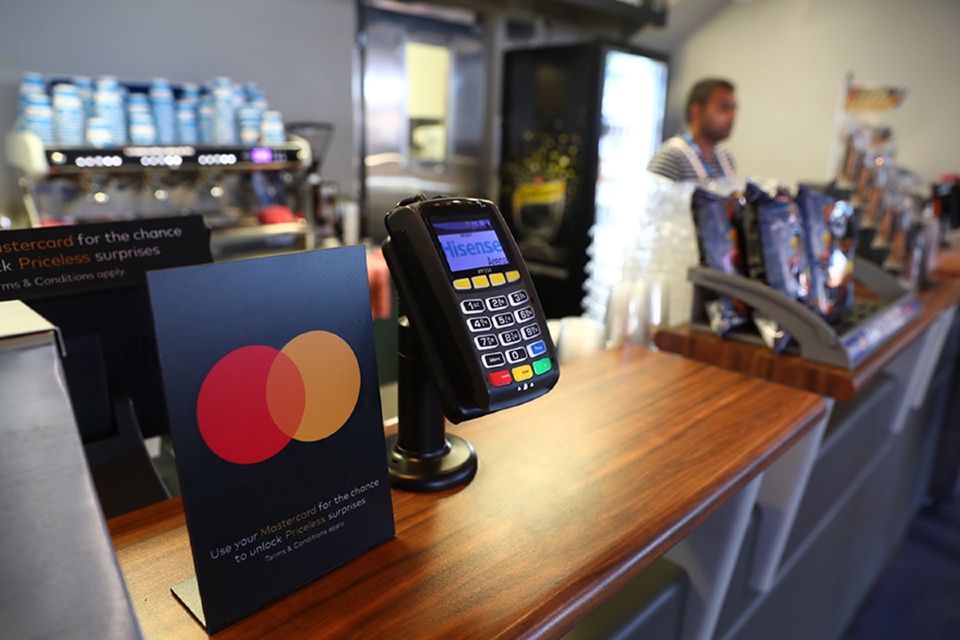
Mastercard has announced new requirements for offline card payments across Europe, designed to maintain access to essential goods and services during power outages and network disruptions.
From February 2027, all newly issued Mastercard cards across Europe will be required to support offline payments, followed by new and replacement payment terminals from May 2027.
The move follows growing concerns about payment infrastructure resilience, highlighted by the widespread power blackout across Spain and Portugal in April 2025, which left an estimated 55 million people unable to make digital payments.
Under the new requirements, customers will be able to make chip and PIN payments at participating merchants even when terminals lose their network connection, provided the terminals have a functioning power supply.
Transactions will be authorised locally using spending limits securely stored on the card’s chip, with a maximum offline transaction value of €200, determined in advance by the cardholder’s bank.
Payments will subsequently be submitted for clearing once connectivity is restored.
For merchants and payment service providers, the initiative introduces an additional layer of operational resilience, while also highlighting the importance of managing transaction risk when real-time authorisation systems are unavailable.
Offline authorisation can help maintain business continuity, although the absence of an immediate connection to central payment systems means appropriate transaction limits and controls remain essential.
Mastercard has already introduced offline payment capabilities in Denmark, Sweden, Estonia and Latvia, where the technology has helped maintain transactions during recent infrastructure disruptions.
In Latvia, payments continued at shops operating on local generators during a storm, while Mastercard’s crisis procedures enabled transactions at critical merchants during a technical outage in Denmark.
The wider European rollout follows coordination with national governments, regulators, central banks and payment industry partners.
Brice van de Walle, Executive Vice President, Core Payments at Mastercard, said: “When the power or network goes down, people still need to buy food, fuel and medicine.”
The announcement forms part of Mastercard’s broader investment in European payment infrastructure and cybersecurity.
For payments and fraud prevention professionals, the changes underline the growing importance of balancing uninterrupted transaction processing with effective risk management, particularly as merchants seek to maintain secure payment services during unexpected disruptions.