
Ask most business owners who actually owns their website, and their likely answer will be “we do”. But if you dig a little deeper and ask them who is actually named on the domain registration, where their CMS login sits or what happens if their web agency shuts down tomorrow, and their answer probably gets a lot less certain. And that can be critical when trying to address instances of fraud, hacking or other cybercrime.
That knowledge gap matters more than most businesses realise. Your website is never just a single asset, but rather a stack of separately owned and controlled layers, and a business can lose meaningful control of its online presence without a single thing going “wrong”. Ben Oates, Hosting Product Manager at Krystal, the UK-based hosting provider, unpacks what online ownership actually means, and why so many businesses have less of it than they think…
What does “ownership” actually mean online?
A typical business website is made up of at least four separate layers, each with its own owner:
- The domain – This is the web address that visitors will use to access your website. Whoever is listed as the registrant with the domain registry legally controls it and renews it, regardless of who built the site or who owns the company.
- The hosting – This refers to the server space where the website’s files actually live. Having access to this determines whether a business can move, update or take down its own website.
- The CMS – Or platform, is the software the website is built on. This could be a self-hosted system like WordPress, or a closed platform like Wix, Shopify or Squarespace.
- Integrations, plugins and third-party tools – This includes everything from the booking system to the payment gateway, or even the analytics tracking. Typically, each of these will be owned or licensed separately.
In an ideal world, a business will have full ownership or administrative control over all four of these layers. In practice, agencies, developers and platforms are often situated between the business and one or more of the layers. This may be for good operational reasons, or simply because nobody thought to change it once the website went live.
Where ownership quietly disappears
The domain name is often the biggest blind spot here. Legally, a domain name isn’t property in the typical way that a business might assume as there’s technically no “owner”. What exists instead of an owner is the “Registrant”: this person is bound by the registration contract and holds the licensed right to use that domain. In practice, whoever holds that registrant status controls the domain, and that isn’t always the business itself.
It’s incredibly common for an agency, a freelance developer or even an individual employee at that company to register a domain using their own details rather than the company’s. This is often through convenience or an oversight that doesn’t get corrected. If that person leaves the business, if the relationship goes sideways or the agency ceases trading, it’s entirely possible that a business becomes locked out of its own web address. Nominet’s Dispute Resolution Service resolved 608 disputes over domains in 2024, with around 45% ending in the domain being transferred to a new registrant. This shows how often registration and rightful control come apart.
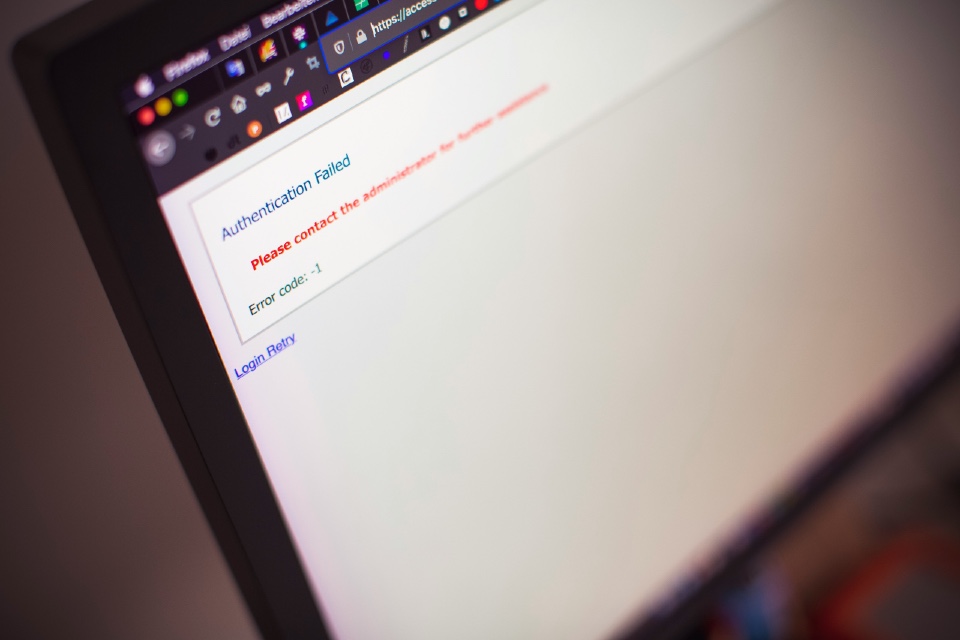
Hosting and access to CMS follow a similar pattern; it’s standard practice for an agency to set up hosting and regularly log into a CMS on their client’s behalf in order to build a site. This is perfectly fine if it suits both parties, but if the business never gets admin credentials, it’s akin to renting access to its own website. If that agency disappears or becomes difficult to work with, a business will be left unable to make even the most basic changes to their website, let alone move everything to a new provider.
The problem of platform dependency
Platforms that are closed and ‘all-in-one’, such as Shopify, Wix and similar, solve a real problem. Through them it becomes fast and simple to get a business online with little technical know-how. But that convenience comes at a price that’s not always communicated off the bat: the business isn’t the complete owner of the environment in which its website runs.
On a closed platform, hosting isn’t typically controlled by the business. They can’t freely move the website elsewhere usually without a rebuild, and major changes are subject to the platform’s pricing, policies and feature changes and there’s often not a lot of room to negotiate. Design templates, apps, and even some elements of the site’s own structure may not be fully transferable if a business ever wants to leave.
While this doesn’t automatically make platforms the “wrong” choice, for small businesses with small budgets they make perfect sense. What this does is make “ownership” similar to that of a long-term lease. You only get full control for as long as you remain with that provider, and end up having a hard conversation the moment you want to leave.
On the other hand, open and self-hosted platforms like WordPress are almost the opposite. A business can, in theory, take its site and move it to any provider of choice, but that independence is contingent on the business also owning the domain, hosting account and CMS outright. Using open software doesn’t guarantee open ownership; it just becomes possible if the surrounding access is correctly set up.
Most businesses don’t find out how much of their website they don’t actually control until something goes wrong, whether an agency stops responding, a platform changes pricing or an employee tries to renew a domain and discovers they can’t. None of these are edge cases; they’re what happens when ownership was never properly checked in the first place.
Owning a website isn’t just about who paid for it. It’s about whether you could up and move to any provider tomorrow and take everything with you. And for a lot of businesses, that simply isn’t the case.
Image credit: https://unsplash.com/photos/black-flat-screen-computer-monitor-bMvuh0YQQ68